
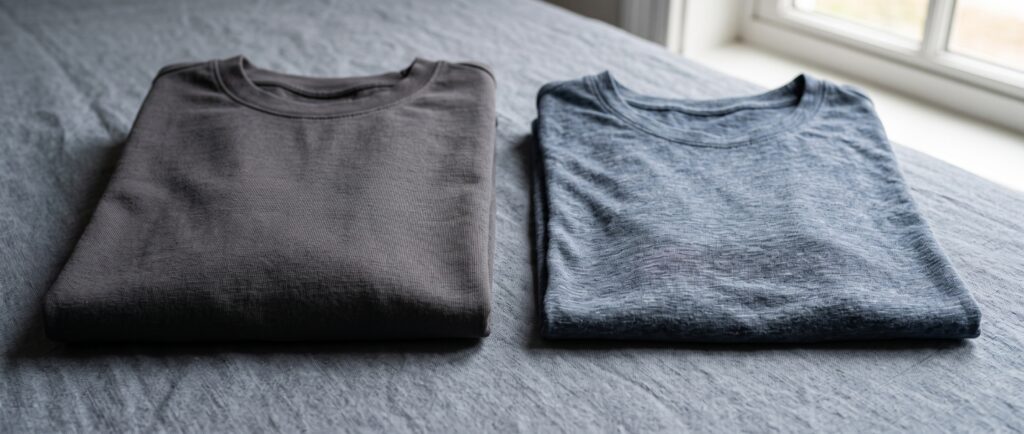
Most buyers pick a t-shirt blank the same way: scroll a catalog, find a color that matches the brand, place the order. The tag on that shirt tells a bigger story, though, and it’s one that affects how the print looks, how the shirt feels, and how happy the recipient is when they put it on. That number on the label, expressed in ounces per square yard or GSM, is fabric weight, and it matters more than most buyers realize.
Integrity Branding has printed across thousands of garment styles from our Carrollton facility since 1990. Over 35 years, we’ve learned that the difference between a bulk order people love and a bulk order people tolerate often comes down to a decision made before a single shirt was ever printed: choosing the right weight.
Our minimum order is 24 pieces. That threshold isn’t just a production standard. It’s a chance to get the garment selection right before committing to a full run. Choosing the correct weight upfront ensures consistent ink laydown and a finished product that feels retail-ready across every single piece in the order, not just the first few.
What Fabric Weight Actually Means
Fabric weight is measured two ways in the apparel industry: ounces per square yard, common in the U.S., and grams per square meter, or GSM, used more often internationally. Both describe the same thing. They tell you how much fabric is packed into a given area. A higher number means a denser, heavier fabric. A lower number means a lighter, thinner one.
This number affects three things buyers care about most: how the shirt drapes on the body, how durable it is over time, and how ink sits on the surface during printing. A shirt that feels too stiff or too flimsy usually traces back to a weight mismatch between the fabric and the intended use. Picking the wrong blank for the job leads to disappointing results even when the print itself is technically perfect.
Heavyweight T-Shirts: Structure, Durability, and Retro Style
Heavyweight T-shirts generally run from 5.5 oz up to 6.5 oz or more, translating to roughly 190 GSM and above. Popular options in this category include Comfort Colors 1717, Shaka Wear, and Gildan Hammer. These shirts have a structured, boxier drape. They hold their shape on the hanger and on the body, and they carry a substantial feel the moment someone picks one up.
Heavyweight blanks work best in a few specific contexts. Streetwear brands favor them for the relaxed, boxy silhouette that’s become a signature look in that space. Workwear environments benefit from the added durability, since a heavier fabric holds up better against repeated wear and washing under physically demanding conditions. Fall event merch and groups wanting a high-end, vintage feel also gravitate toward heavyweight cotton, since the denser weave gives off a premium, worn-in quality even on a brand-new shirt.
Screen printing on heavyweight cotton has a practical advantage too. The dense weave structure absorbs ink cleanly, which allows for bright, opaque prints with minimal bleed-through to the reverse side of the fabric. For designs with bold colors or large coverage areas, heavyweight blanks consistently produce a cleaner, more vibrant finished print.
Lightweight and Midweight T-Shirts: Softness, Breathability, and Texas Heat
Lightweight and midweight T-shirts typically fall between 3.8 oz and 4.5 oz, or roughly 130 to 150 GSM. Soft ring-spun options in this range include Bella+Canvas 3001, Next Level 3600, and Port & Company’s Fan Favorite line. These shirts feel soft against the skin from the first wear, with a relaxed, fitted drape that hugs the body without feeling boxy.
For DFW buyers, lightweight cotton and ring-spun blends are frequently the preferred choice for outdoor summer events. North Texas summers run hot for months at a time, and a heavier fabric traps heat against the body in a way that gets uncomfortable fast. Gym wear, corporate giveaways meant for everyday use, and any event held outdoors between May and September all benefit from a lighter blank that breathes.
Printing on lightweight fabric requires more precision than printing on heavier cotton. Because the fabric is thinner, ink needs to be mixed and applied carefully to avoid a stiff, heavy feel on the chest once it dries. Soft-hand screen printing techniques, which use a thinner ink deposit designed to flex with the fabric, keep the final print feeling like part of the shirt rather than a rigid layer sitting on top of it. Our commercial automatic presses at Integrity Branding are calibrated specifically to achieve that soft-hand result on lightweight blanks, so the printed shirt still feels as soft as the unprinted one.
Choosing the Right Weight for Your DFW Group Order
The right fabric weight depends entirely on what the shirt is for. A quick way to think through it:
Employee work tees that need to hold up under daily wear and repeated industrial washing benefit from a mid-to-heavyweight blank in the 5.0 to 6.0 oz range. Durability matters more here than a soft, fashion-forward drape.
Promotional event giveaways meant for outdoor wear in Texas heat do best in the lightweight-to-midweight range, generally 3.8 to 4.5 oz. Comfort and breathability drive whether the recipient actually wears the shirt again after the event.
Retail-style merch, meant to be worn as a genuine wardrobe piece rather than a one-time promotional item, tends to perform best with soft ring-spun cotton in the lightweight range, paired with a more fitted, modern cut.
Budget planning ties directly into this decision. Heavier blanks generally cost more per unit than lightweight ones, so selecting the appropriate weight for the actual use case keeps a bulk custom shirt order within budget while protecting profit margins on any fundraiser or resale program. Overspending on a heavyweight blank for a summer giveaway wastes budget on durability the shirt will never need. Underspending on a lightweight blank for a workwear program creates a shirt that wears out faster than expected.
For buyers who want to feel the difference firsthand before committing to a full run, our Carrollton showroom at 1407 Westway Circle is open for exactly that. Touching fabric samples, comparing weights side by side, and inspecting finished print quality in person removes the guesswork from a decision that’s often made from a catalog photo alone.
Getting It Right the First Time With Integrity Branding
Fabric weight is one of the most overlooked decisions in a bulk apparel order, and it’s also one of the easiest to get right with the correct guidance. Heavyweight cotton delivers structure, durability, and vibrant ink laydown for workwear, streetwear, and cold-weather merch. Lightweight and midweight blends deliver comfort and breathability for Texas summers and everyday retail-style wear. Matching the right weight to the right purpose is what separates a shirt people actually wear from one that ends up in a drawer.
Integrity Branding has helped DFW buyers make this decision for over 35 years, and our team is ready to walk through the options for your next bulk T-shirt order, whether that’s 24 pieces or several hundred.