Thread density is how many stitches are packed into a given area of a logo. Stitch mapping is the plan that tells the machine where each stitch goes. Get both right and a logo looks crisp. Get them wrong, and it puckers, gaps, or turns stiff. Integrity Branding has digitized logos at our Carrollton facility since 1990. Over 35 years, we have learned that the best custom embroidery results start long before the machine runs. They start with the digitizing file.
What Is Digitizing, and Why Does It Matter?
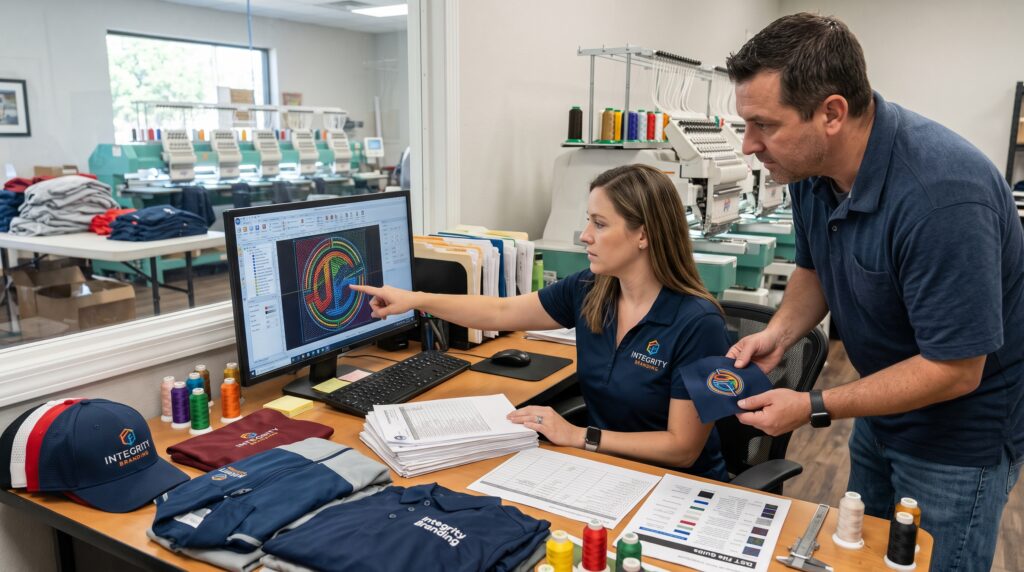
Digitizing turns a flat graphic into instructions for the embroidery machine. A designer’s logo has no stitches. A digitizer decides the direction of each stitch, the order they sew in, the thread tension, and the density. The finished file is usually a .DST file.
This is where most quality problems begin. A weak file produces a weak logo, no matter how good the machine is. A strong file produces the same clean result on piece one and piece two hundred. For custom embroidery buyers comparing Dallas vendors, the digitizing step best predicts quality.
What Is Stitch Count, and How Many Stitches Does a Logo Need?
Stitch count is the total number of stitches in a design. A small left-chest logo often lands near 5,000 stitches. A larger or more detailed mark can pass 15,000.
With so many stitches per piece, there are three key drivers we always look out for:
- Logo size: A bigger design needs more thread to cover the area.
- Fine detail: Small text and thin lines take more stitches to stay readable.
- Fill areas: Solid blocks of color use far more stitches than outlines.
A higher stitch count means more machine time, and more machine time raises the cost per piece. Digitizing is a one-time effort, though. Spread across a large run, it adds very little to each garment. That is one reason bulk custom shirts and other embroidered apparel cost less per unit as quantities grow.
Why Does Too Much Density Cause Puckering?
Dense stitching adds weight and stiffness. On a thin polo, a packed logo feels like a patch of armor. It also pulls the fabric inward, which creates ripples and gathering around the edges.
More thread does not mean a better logo. The right density depends on the garment. A light performance polo needs a gentler setting than a thick fleece. A good file feels soft to the touch and lies flat against the body.
Signs of over-density include:
- A stiff, board-like feel in the logo area
- Wrinkles radiating out from the edges
- Thread breaks during production
- Small holes where the needle punched too often
We test and adjust each file before the full run starts, so these problems are caught early.
What Does Underlay Do in Embroidery?
Underlay is a layer of foundation stitches sewn first, underneath the visible design. It anchors the fabric to the backing and gives the top stitches something to sit on.
Without underlay, fill stitches sink into soft fabric and look flat. Edges turn ragged. With the right underlay, the logo stands slightly raised, and the lines stay sharp. Think of it as the frame under a wall. You never see it, but everything above depends on it.
Underlay also changes by fabric. A towel-like fleece needs a heavier base than a smooth poly shirt. This is part of what a trained digitizer sets up in advance.
How Is Digitizing Different for Hats?
Hats curve, and the center seam sits right where the logo wants to go. A flat design stitched onto a cap panel will often warp, shift, or sit crooked.
Two techniques solve this:
- Push-and-pull compensation: Fabric moves while it is stitched. Digitizers build in small adjustments so the finished shape matches the original artwork.
- Center-out digitizing: The file starts at the middle of the panel and builds outward. This keeps letters straight and the logo centered across the seam.
Many buyers searching for custom hats discover that a logo that looked perfect on screen can look off on a structured cap. Simpler artwork helps. So does a file made for the curve. Our team prepares every headwear file for the panel shape, keeping a 100-piece run uniform from the first cap to the last.
How Do Jackets and Polos Need Different Setups?
Heavy and light garments behave in opposite ways under the needle, so each needs its own digitizing plan.
| Garment | What it needs |
| Duck canvas jacket or fleece | Stronger underlay, higher density, firm backing to handle thick fabric |
| Performance polo | Lighter density, softer underlay, careful tension to avoid puckering |
| Structured cap | Center-out file with push-and-pull adjustments for the curve |
A company that outfits a whole team often orders several of these at once. Corporate custom work shirts commonly pair polos for the office with jackets for the field. One logo can look different on each. We build a separate file for each garment type so the brand looks the same everywhere.
Why Does In-House Digitizing Matter?
In-house digitizing means the person who builds your file works in the same building as the machines. That person can adjust the file, run a test, and fix problems the same day.
Automated digitizing programs work differently. They convert artwork with no knowledge of the fabric. They miss stretch, pile height, and the way thread pulls on a given material. The result is often thread gaps, fraying edges, and uneven coverage. Real fabric tells the truth, and software alone cannot predict it.
Our Carrollton team checks each file against the actual garment. For businesses looking for custom embroidery providers they can reach in person, that hands-on step makes a visible difference.
Can I See a Stitch-Out Before My Bulk Order Runs?
Yes. A stitch-out is a physical sample of your logo sewn on real fabric. You can see the thread colors, feel the density, and judge the edges before the full run begins.
We invite you to visit our shop in Carrollton to inspect stitch-outs in person. Bring your garment choices if you have them. Compare how the logo looks on a thin polo and on a heavier jacket. Approve it once, and that same setup repeats across the entire order. It is the simplest way to avoid surprises.
Start Your Garment Creation With Integrity Branding
Start with clean vector artwork and a clear idea of the garments you want. Share both with our team. We will build the file, stitch a sample, and adjust until it looks right. Then we run your order at 24 pieces or more, with every piece matching the approved sample.
Integrity Branding serves Carrollton, Plano, Frisco, Fort Worth, and the rest of the DFW Metroplex. If you want embroidery that stays sharp through years of wear, we are ready to help. Contact us today!